Experts from the Institute played a key role in the debate, and their presentations were met with enthusiastic reception.

At the 6th International Congress on Urban Health Regeneration, held on 5–6 May 2026 at EC1 Lodz – City of Culture, researchers from the Institute of Turbomachinery of Lodz University of Technology were strongly represented. For years, they have been conducting advanced research on environmental quality, airflows, and technologies that support healthy functioning in modern cities. Their presence gave the event a distinctly scientific character.
One of the highlights of the Congress program was the panel ”Gone with the Wind? Spatial Planning for Air Quality”, dedicated to air quality and the role of spatial planning in shaping a healthy urban environment. The session was moderated by Dr. habil. Eng. Grzegorz Liśkiewicz, who has long been conducting research on airflow in urban structures and modeling environmental phenomena.
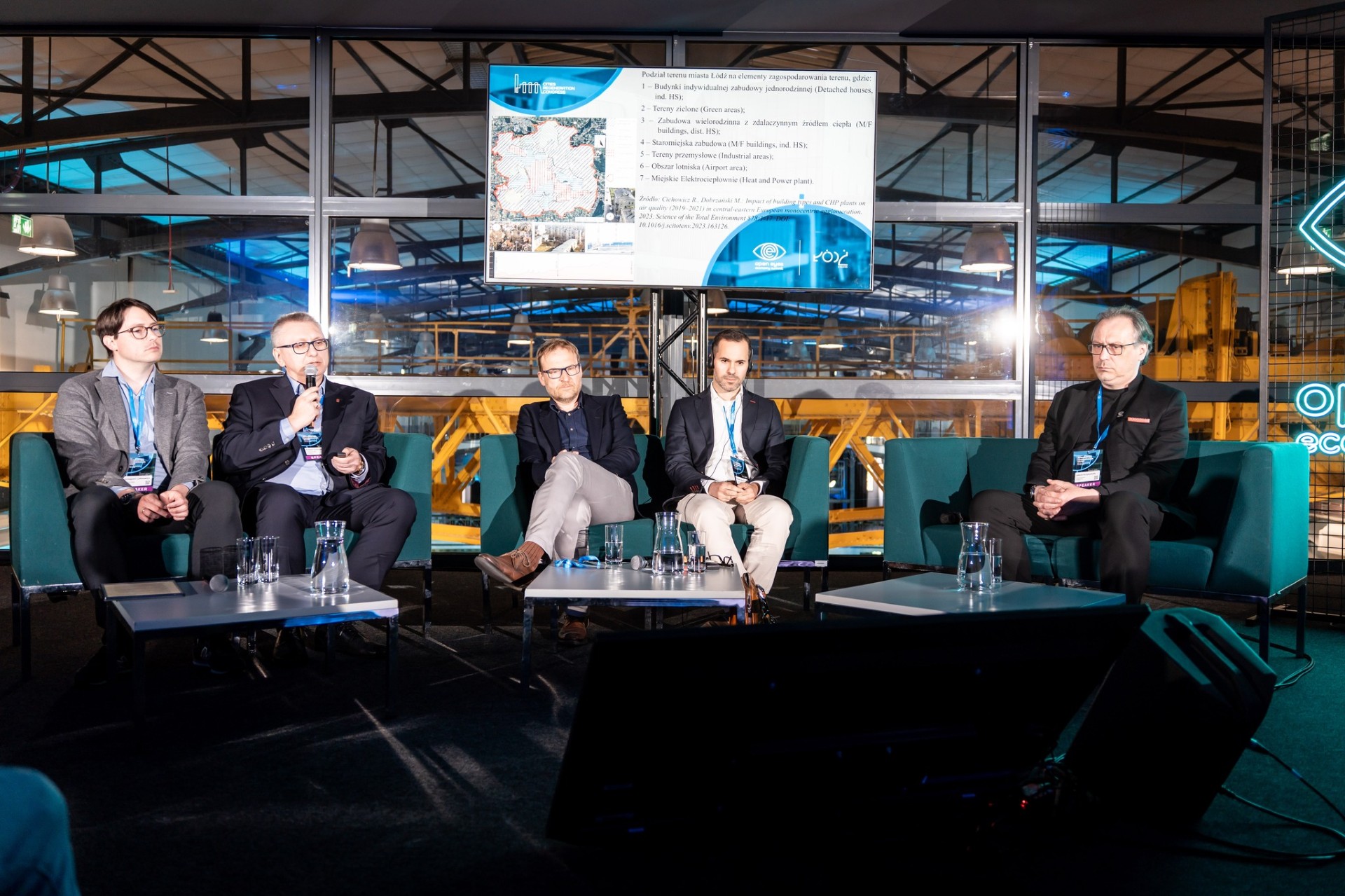
The discussion brought together experts from Poland and across Europe, and the panel focused on the role of urban ventilation corridors, the impact of building structures on local microclimates, tools for modeling airflow, and practical solutions aimed at improving residents’ quality of life. The conversation had a distinctly interdisciplinary character, combining engineering, urban planning, and social perspectives.
Another key point in the program was the panel ”The Beating Heart of the City – The Regenerative City as an Ecosystem for Cardiovascular Health in Children and Adults”, dedicated to cardiovascular health among urban residents. The session was moderated by Dr. Eng. Dariusz Witkowski, a specialist in modeling flow and environmental phenomena. The panel also featured Dr. Eng. Anna Karczemska, who for years has been studying the impact of the urban environment on health and developing technologies that support improving quality of life in densely built‑up areas.
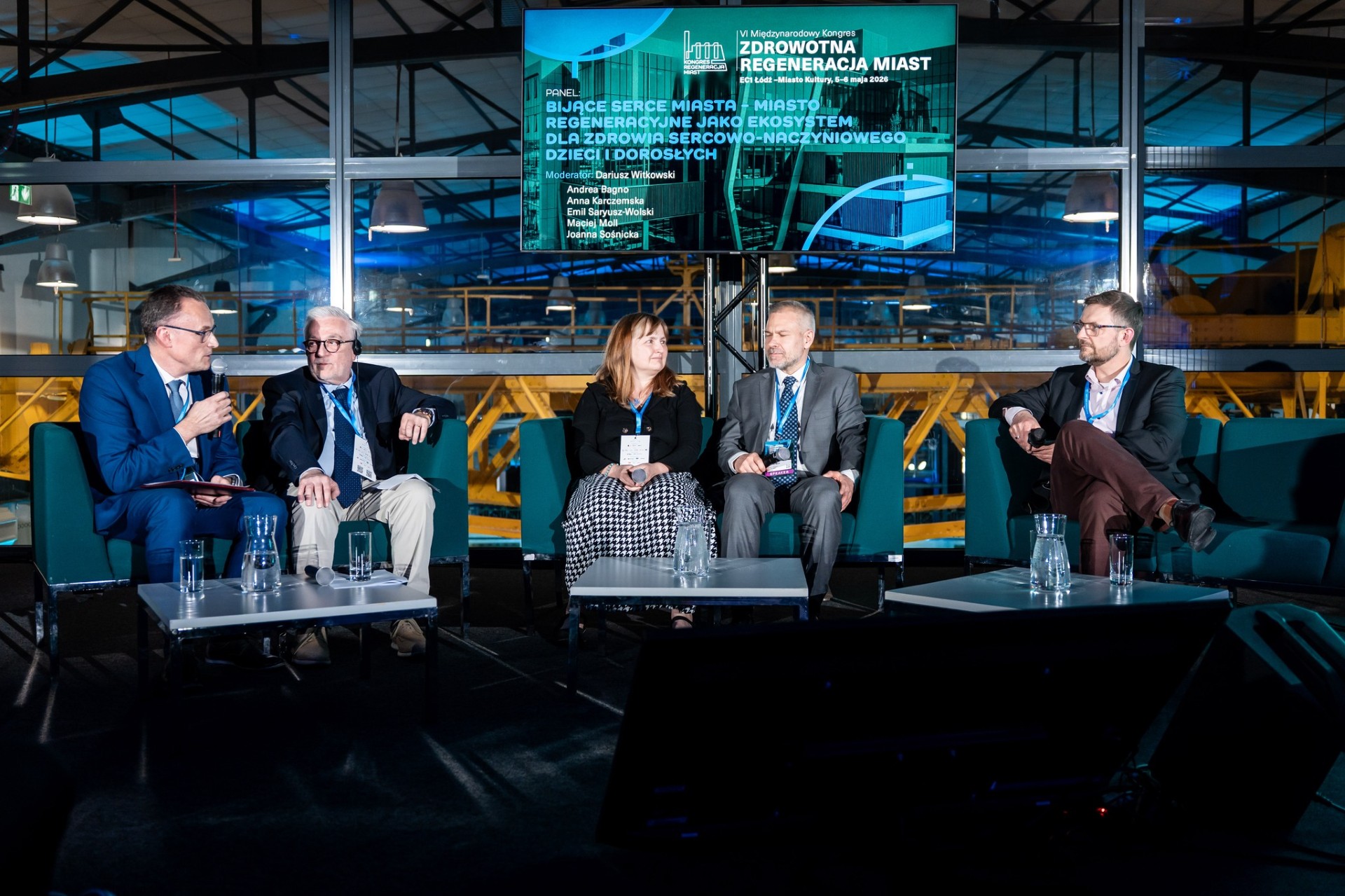
The discussion addressed, among other topics, the impact of air pollution on the cardiovascular system, the design of spaces that encourage physical activity, the role of urban greenery in reducing stress and health burdens, and the concept of the “regenerative city,” which supports residents’ health at every stage of life.
Both presentations attracted significant interest from participants, and our experts emphasized that public health must become one of the key criteria in designing modern cities. The discussions demonstrated how crucial a role science plays in shaping urban policies. Their work on airflow modeling, environmental quality analysis, ventilation system design, and the use of data and digital technologies in urban planning forms the foundation for contemporary urban health strategies.
In the face of climate change, aging populations, and increasing urbanization, cities are becoming the places where the most pressing health challenges of the 21st century converge. The Congress once again proved that collaboration among scientists, urban planners, physicians, and policymakers is essential for creating healthy, resilient, and resident‑friendly urban spaces.